Tree Care Guides
7 Signs a Tree Should Be Removed
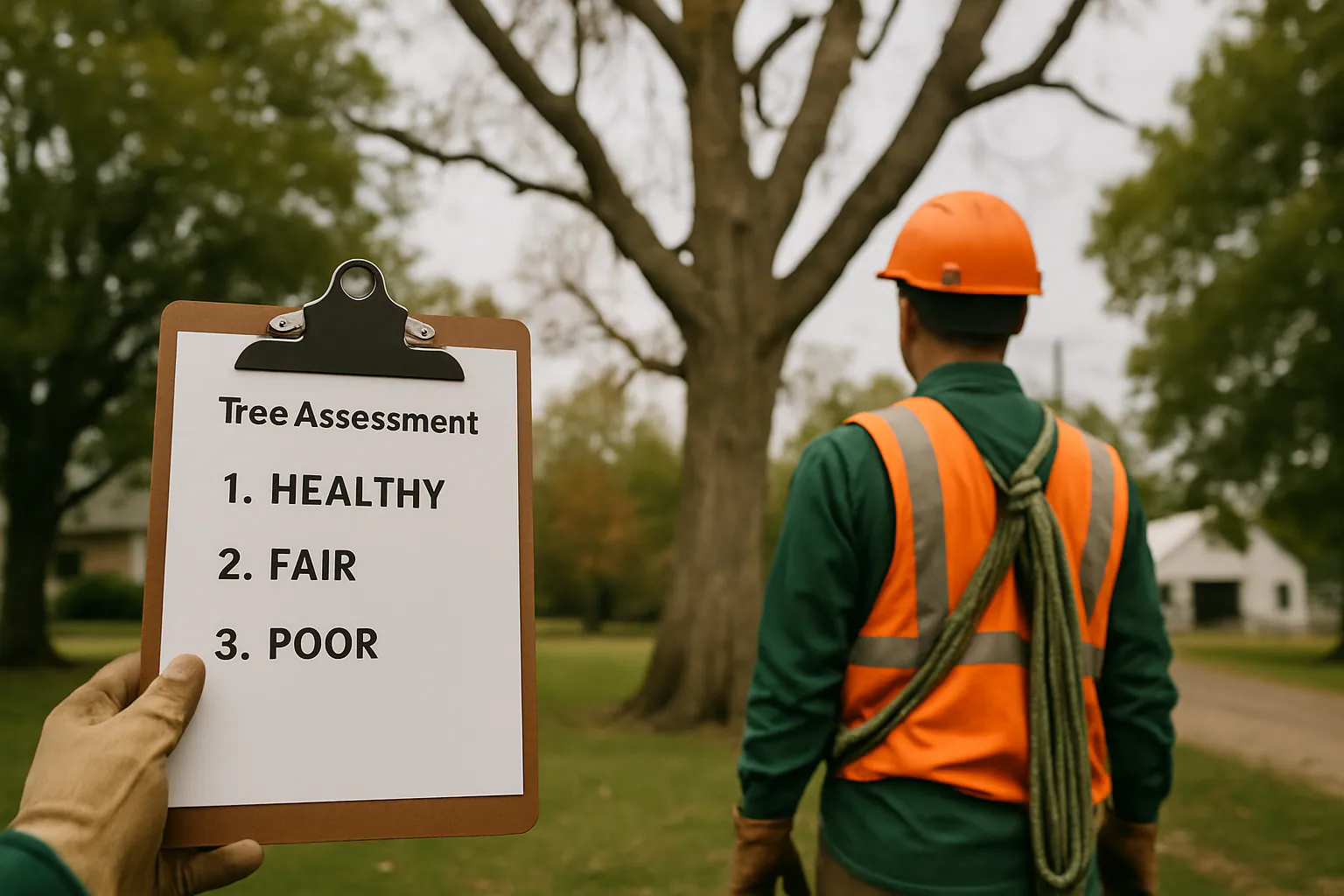
Trunk decay you can see, major crown death, root plate movement, structural cracks through main stems, repeated major limb failures, fatal disease confirmation, and construction-forced displacement constitute the seven signs justifying tree removal — everything else deserves consideration of alternatives first.
Sign One: Visible Trunk Decay
Conks (shelf fungi), old cavity wounds weeping sap, hollow-sounding wood when tapped, carpenter ant trails entering trunk seams — these indicate internal decomposition undermining the stem holding everything aloft. External appearance misleads; internal structure decides. Significant trunk decay near targets removes alternatives from consideration.
Sign Two: Major Crown Death
Top-third-bare crowns signal root or vascular system failure underway. Below-half-crown-loss trees rarely recover meaningfully — they decline slowly while becoming brittle, converting manageable scheduled removals into complicated hazardous ones through pure procrastination.
Sign Three: Root Plate Movement
Soil mounding, ground cracking, sudden lean development, exposed lifting roots — the tree is rotating out of the ground in measurable stages. Active root failure tolerates zero waiting; fall radius becomes evacuation zone immediately.
Sign Four: Structural Cracks Through Stems
Vertical cracks running down main trunks, especially between co-dominant leaders, propagate mechanically with each loading cycle. Deep enough cracks convert trees into scheduled failures — timing merely awaits sufficient wind.
Sign Five: Repeated Major Limb Loss
- Second-or-more significant limb failures within recent memory
- Failure patterns concentrating on one side suggesting asymmetric decline
- Failures originating from the same compromised junction repeatedly
One limb failure prompts investigation; repeat performances confirm systemic structure problems pruning cannot cure — only delay expensively.
Sign Six: Confirmed Fatal Disease
Emerald ash borer in advanced infestation, confirmed oak wilt, Dutch elm disease in susceptible American elms — certain diagnoses carry predetermined endings. Planning removals around known timelines beats reacting to surprise collapses mid-decline. Our EAB county guide details the local ash situation specifically.
Sign Seven: Site Requirements Changed
Additions, driveways, septic repairs, pool installations — legitimate construction needs displace trees regardless of health. This sign involves choice rather than biology, making cost-comparison shopping appropriate: quality removal pricing transparently itemized against project timelines.
Absence of all seven signs means your tree likely needs maintenance rather than termination — honest crews say so explicitly. Around Corder and Lafayette County, second opinions cost nothing but a call to (855) 714-0391. Companion reading: dead tree timing.