Tree Care Guides
Should You Remove a Dead Tree Immediately?
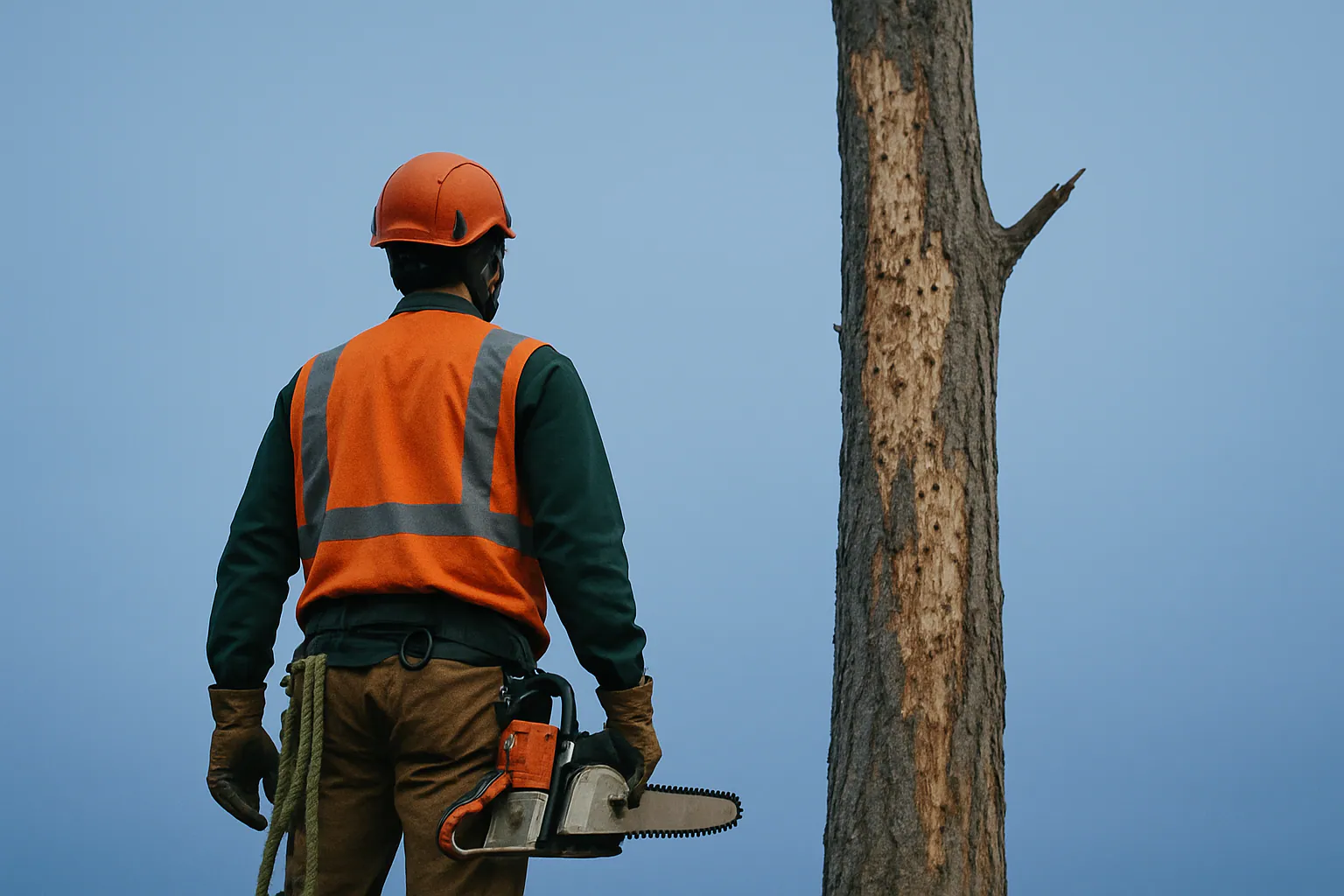
Remove a dead tree promptly whenever its fall radius includes structures, roads, power lines or gathering areas — otherwise scheduling within weeks rather than days usually suffices. What never varies: dead wood embrittles continuously, so every timeline option eventually expires.
The Brittleness Timeline
Death initiates predictable deterioration: bark loosens within months, sapwood dries through the first year, attachment points weaken as decay fungi mobilize, and climbability declines correspondingly. Year-one dead trees remain routine removals; five-years-dead specimens near structures often require specialized rigging precisely because climbing them endangers crews. Cost follows condition — earlier removals price lower for identical trees.
Priority Tiers by Target Exposure
- 1Immediate attention: fall radius touches dwellings, occupied roads, parking areas, play equipment, livestock pens
- 2Prompt scheduling (weeks): outbuildings, fences, septic fields, driveways, garden infrastructure
- 3Planned convenience: open field corners, far edges of acreage where failure harms nothing but silence
Tier three genuinely can wait a season for budget or timing reasons. Tier one shouldn't wait for anything except weather safe enough to work.
Species Changes the Clock Speed
- Ash post-EAB: deteriorates unusually fast — brittle within 1–2 years of death, sometimes less
- Pine: beetle-killed pines shed bark and limbs early; standing-dead pine work demands respect quickly
- Oak: holds structure longer than softwoods but decays internally unpredictably once compromised
- Cottonwood/silver maple: already-brittle species that barely need death to drop limbs — death accelerates existing tendencies
Insurance and Liability Angles
Documented knowledge of dead trees creates duty-of-care expectations. Insurers generally exclude preventive dead tree removal coverage but absolutely scrutinize negligence after failures — "we knew it was dead" reads poorly in liability proceedings regardless of outcome. Removal receipts double as due-diligence documentation either way.
What “Prompt” Looks Like Practically
- 1Call for assessment and quote — (855) 714-0391 reaches our Lafayette County operation directly
- 2Schedule within available windows rather than waiting for perfect ones
- 3Bundle adjacent work (stump grinding, trimming nearby keepers) while equipment is present
- 4Keep firewood value if desired — many dead hardwoods burn excellently; say so during quoting
For diagnosis before decisions, see seven removal signs and Lafayette County's EAB situation.