About 22 miles north of Corder — roughly a 30-minute drive · Serving since 1992
Call (855) 714-0391 when the yard oaks outgrow their welcome or a dead giant needs a plan instead of a wish.
What Tree Problems Are Common Around Dover, MO?
River-proximity soils around Dover are among the most productive tree-growing ground in the state. The upside is magnificent shade; the downside is that fast growth in rich alluvial soil produces exactly the species mix that fails dramatically — cottonwoods, silver maples, sycamores and willows with wood that never quite earns its size. Large lots mean trees often stand close enough to matter but far enough to ignore for years, until they aren't.
The work profile here skews toward removals of overmature softwoods and deadwooding of the better oaks and walnuts worth keeping. Big-lot access usually allows efficient equipment operation, which helps pricing versus tight-town jobs.
How Far Is Dover from Your Shop?
Coverage includes Dover town, the surrounding acreages and the river-township roads linking toward Waverly and Lexington. Northern Lafayette County has been regular territory since our early years — these communities share feed stores, churches and school districts with the southern towns we call home, and the service map reflects it.
What Should You Know Before Scheduling Tree Service in Dover, MO?
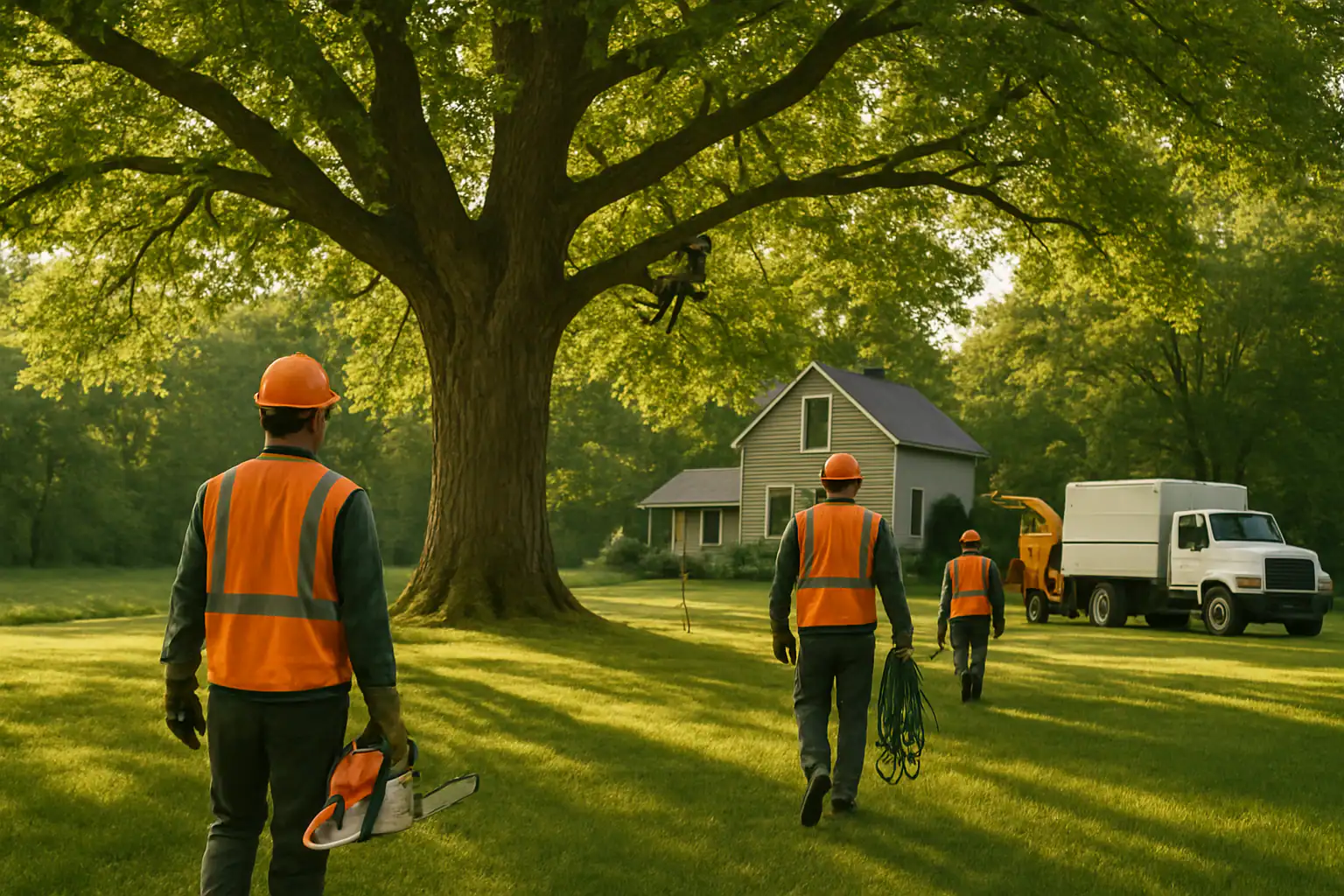
Dover jobs are usually big-tree jobs. The deep river-country soils that make this ground famous for growing crops also grow cottonwoods, sycamores and silver maples at speeds their wood never earns, so the typical call is a removal planned like a project: sectional rigging on a two-to-three foot diameter trunk, equipment working efficiently across big-lot access, and a stump grind that lets the mowing pass cleanly the same week. The keepers — oaks, walnuts, the occasional fine pecan — get the opposite treatment: deadwooding and weight reduction that buys decades.
Timing has a Dover-specific wrinkle: bottomland soils stay soft long after rain, which decides when heavy equipment can roll without rutting lawns or burying trucks. Spring jobs may wait a week for ground conditions; fall through winter is the wide-open season for major removals. Oak pruning stays in dormancy for oak wilt reasons, and ice-season preparation — deadwooding the brittle giants before November — is the highest-value visit most Dover properties can book.
Scale works in customers' favor here. Large-lot access means cranes and chippers operate at full efficiency instead of hand-processing, which shows up in better per-tree pricing than tight-town equivalents. Dover runs group with Waverly, Wellington and Lexington into northern scheduling days, quotes are itemized in writing, and firewood-length rounds from the big softwoods stay stacked on site whenever the owner wants them.
Local Reference Points We Work Around in Dover
- River-township roads toward Waverly and Lexington
- Large-lot acreages north of town
- Missouri River bottomland edges
Which Tree Services Do You Offer in Dover, MO?
Nearby Areas We Serve
Part of our Lafayette County, MO coverage area — see that page for county-wide scheduling details.