Tree Care Guides
Stump Grinding vs Stump Removal: Which Should You Choose?
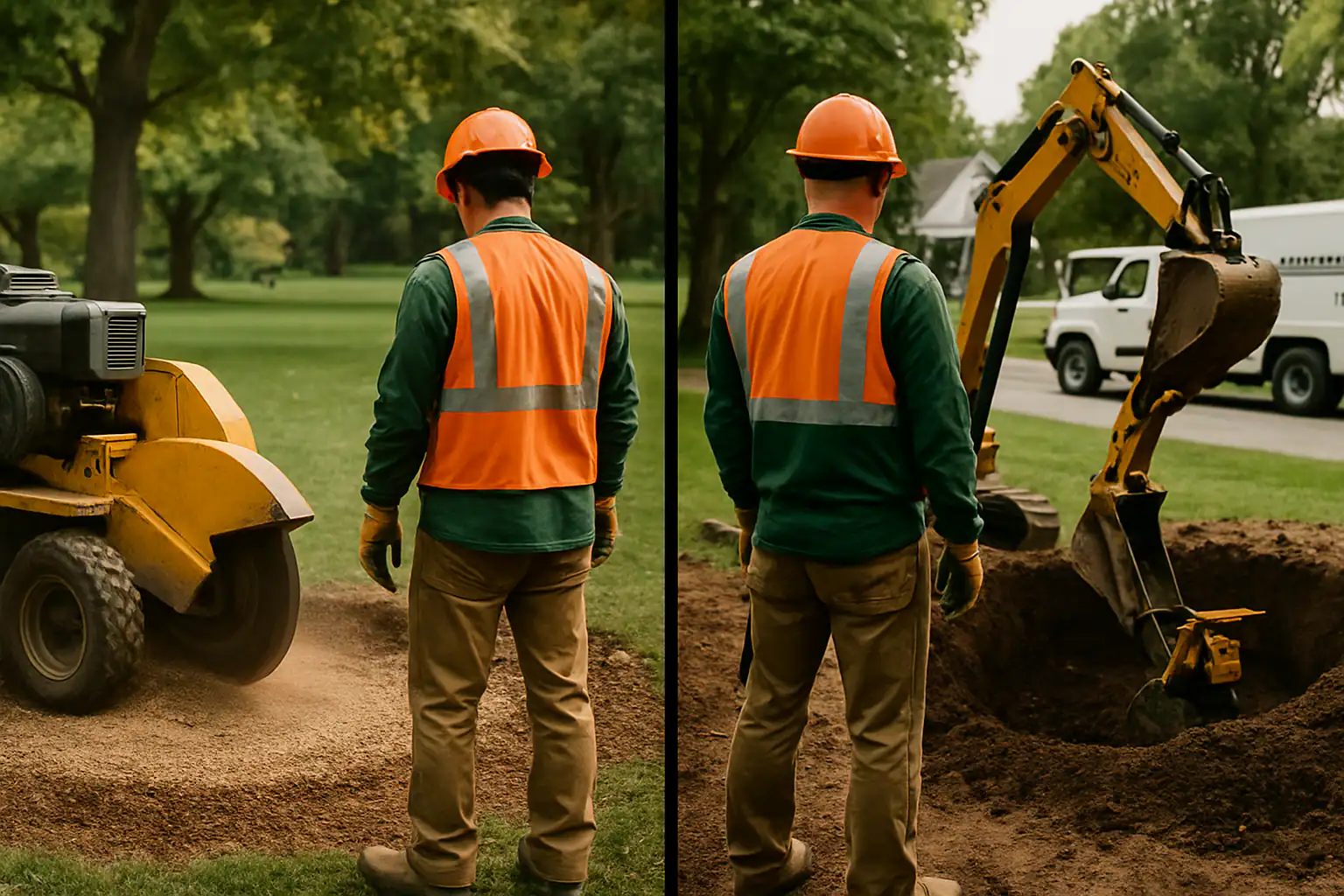
Choose grinding for landscape purposes — faster, cheaper, less disturbance. Choose full removal only when construction, replanting-at-depth or absolute clearance demands the entire root mass gone. For roughly nine of ten situations, grinding wins on merit rather than compromise.
What Each Method Actually Does
- Grinding: machine chips the stump 6–10+ inches below grade; roots stay to decompose naturally underground over years — harmless in nearly all contexts
- Removal/extraction: equipment digs or pulls stump and primary root structure completely; hole gets backfilled and compacted; surface roots chased across work area
Decision Table by Situation
- Return area to lawn: grinding — backfill, topsoil, seed, done
- Garden bed conversion: grinding — residual roots matter little to annuals and perennials
- Replanting a tree nearby (not same spot): grinding suffices
- Replanting in the exact spot: extraction preferred — old root congestion and species-specific soil pathogens argue for clean slate
- Footings, decks, additions: extraction — building codes and settlement math demand it
- Septic/drainage work overlapping: extraction — laterals need clear corridors
- Fence-line clearing on farms: often extraction — machinery catches buried stumps for decades otherwise
- Budget-constrained cosmetic fix: grinding, decisively
Cost and Time Realities
Grinding prices per diameter-inch and completes typical residential stumps within an hour-plus. Extraction prices off stump-plus-root complexity and may consume half-days with equipment mobilization. Expect meaningful multiples between them for identical stumps — justified by material moved, not padding. Bundling either with tree removal during same visits improves economics further.
Aftermath Differences
- Grinding aftermath: chip pile requiring distribution or haul-off; gradual soil settling over first year; possible sprouting from remaining roots in persistent species needing occasional clip-back
- Extraction aftermath: immediate full use of cleared ground; larger hole requiring engineered backfill; more site disturbance during the work itself
Still Unsure?
Describe your end goal during a call to (855) 714-0391 — "grass for kids" and "footings for garage" receive opposite recommendations deliberately. Serving Corder and surrounding communities, we perform both methods and recommend whichever serves rather than whichever's trailer is loaded. Extended comparison lives in our grinding depth guide.