Tree Care Guides
Can a Large Tree Be Removed Without Damaging Your Yard?
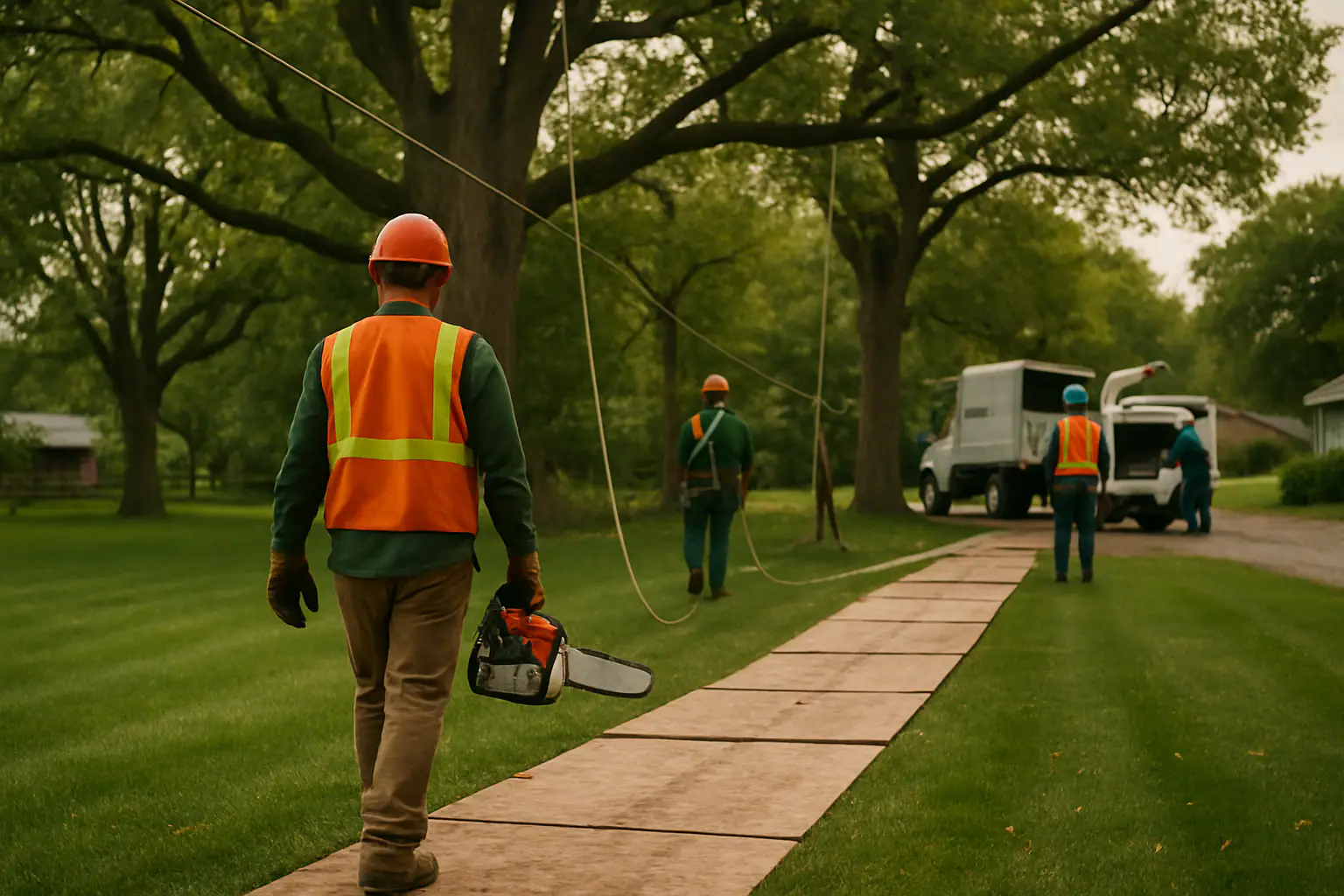
Yes — large tree removal done properly limits yard damage to minor, temporary tracking marks through deliberate rigging, planned equipment routes and disciplined cleanup. Zero-impact claims deserve skepticism; near-zero outcomes are achievable and verifiable.
Where Yard Damage Actually Comes From
- Dropped sections free-falling onto turf — craters from hundred-pound limbs are permanent until re-sodded
- Equipment routing laziness — repeated same-path passes rut even firm ground
- Unplanned staging piles concentrating weight and killing grass underneath over hours
- Stump-grinding chip mountains left smothering lawns instead of distributed or hauled
- Dragged trunks scoring soil diagonally across yards toward trucks
Every damage mechanism traces to planning failures rather than inevitability — which is why method matters more than promises.
The Method That Protects Ground
- 1Route planning during quoting: entry, working circle and exit mapped against soft spots, beds and drainage before wheels roll
- 2Section-by-section rigged descent: nothing significant drops uncontrolled — rope-lowered pieces land where intended, gently
- 3Rotating staging zones: brush piles move between locations rather than compounding single spots
- 4Ground protection where needed: plywood or board paths across vulnerable stretches during equipment moves
- 5Continuous processing: chipping and log-staging happen parallel to cutting, preventing end-of-day mountain problems
- 6Final rake-and-inspect walk-through: with you, checking agreed standards before departure
Honest Limitations Worth Knowing
Wet-season clay soils challenge everyone — equipment leaves impressions regardless of care when ground saturates. Options then: reschedule for firmer conditions, accept-and-repair minor tracking, or hand-carry extended operations at labor cost. Root-zone excavation near final stump positions disturbs soil inherently. Perfection remains unavailable; professionalism remains verifiable. Ask prospective crews specifically about their wet-ground protocols — answers separate planners from wishers.
Questions That Predict Outcomes
- "Show me the rigging plan for sections over my beds" — specifics expected, not vibes
- "Where will equipment travel and what protects those lines?" — routing fluency indicates preparation depth
- "What does your cleanup include exactly?" — rake-level standards stated plainly
- "What happens if it rains mid-job?" — contingency thinking reveals operational maturity
Our large tree removal service around Corder operates exactly these protocols daily. Related reading: removal cost factors and near-building removal methods.