Tree Care Guides
How Deep Does Stump Grinding Go?
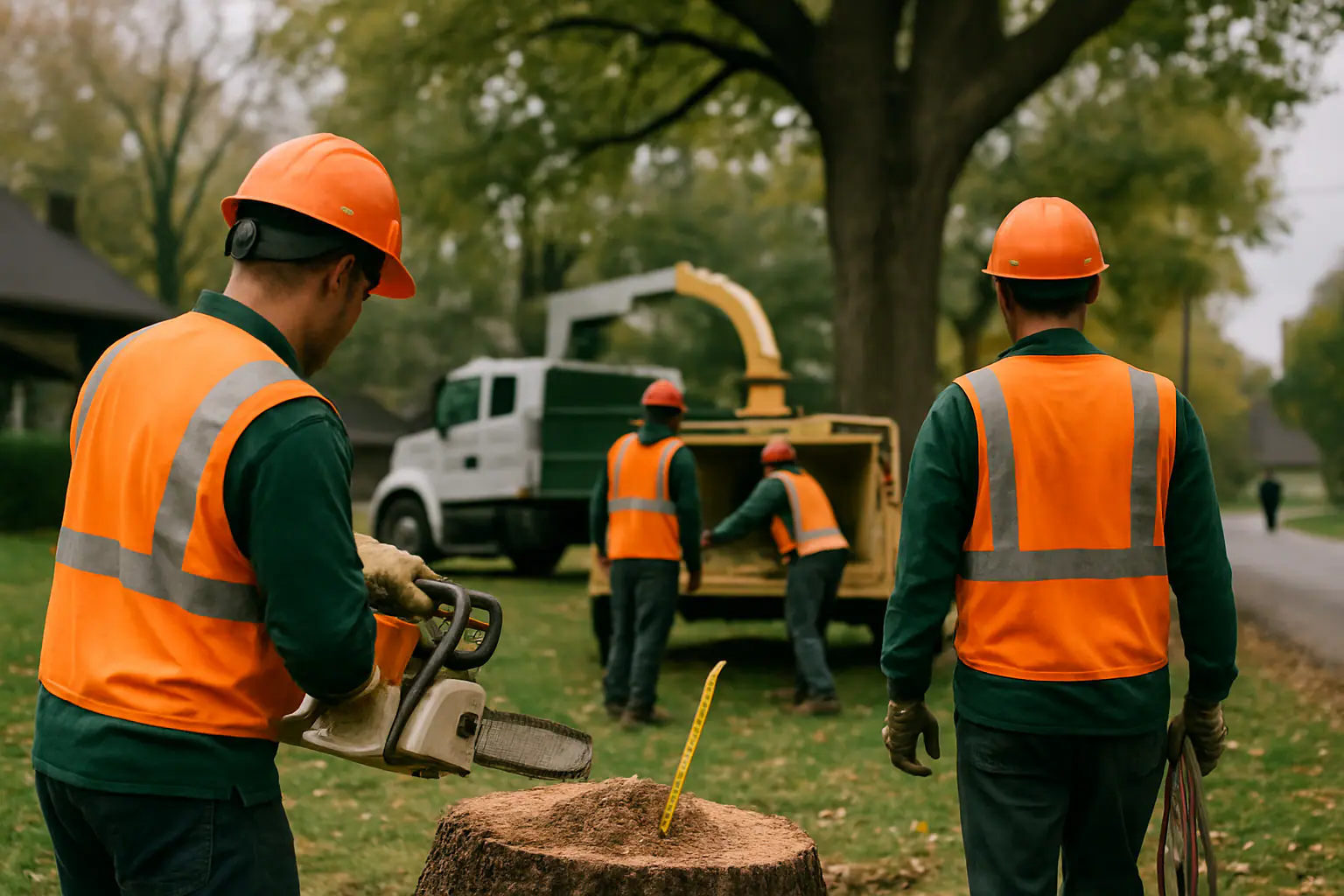
Standard stump grinding removes wood to roughly 6–10 inches below grade — enough for mowing, mulching and light landscaping — while deeper passes (12–18+ inches) serve replanting projects, and full extraction replaces grinding entirely when construction demands it. Depth follows purpose; quoting follows depth.
Why Standard Depth Works for Lawns
Mower decks clear 3–4 inches easily; anything beyond that overkill for turf purposes. Remaining root material below grind line decomposes naturally within several years, recycling nutrients without surface evidence. Settling happens modestly since chips-plus-soil backfill consolidates once — top up after first heavy rain and forget it.
When Deeper Makes Sense
- Replanting trees or large shrubs nearby: 12–18 inches clears the worst competition zone
- Sod installation: extra depth plus clean topsoil cap prevents sink spots and rot-brown patches
- Drain-tile or shallow utility crossings: verified clearance beats assumptions near buried infrastructure
- Persistent-sprout species: silver maple, locust, osage sometimes resprout from shallow remnants — deeper cuts reduce callbacks
What Grinding Cannot Do
Grinders cut where their wheels reach: straight down and slightly flared. They don't chase lateral roots horizontally across yards (surface roots can be traced and ground individually), don't extract the root ball wholesale, and don't operate below machine limits regardless of enthusiasm. Jobs requiring more belong with full removal — knowing the boundary prevents paying grinding prices for excavation expectations.
Depth Questions Answered Before Cutting
- 1"What happens here afterward?" — determines which depth tier applies
- 2"Anything buried nearby I should know about?" — sprinklers, invisible fences, drain lines get flagged before teeth meet them
- 3"Sprout-prone species?" — identification influences depth recommendation automatically
- 4"Settling concerns?" — backfill composition adjusts per future plans
The Chip Volume Side Effect
Deeper grinding multiplies chip production — a 24-inch stump at standard depth yields roughly a pickup-load equivalent. Deep passes double that. Plan accordingly: chips spread as garden mulch, backfill mixed with soil, or hauled away — options priced transparently during quotes rather than discovered in piles afterward. Our grinding service around Higginsville and Lafayette County handles all handling preferences routinely. Related: grinding versus extraction comparison and Missouri cost factors.