Storm & Urgent Situations
What to Do After a Tree Falls in Your Yard During a Storm
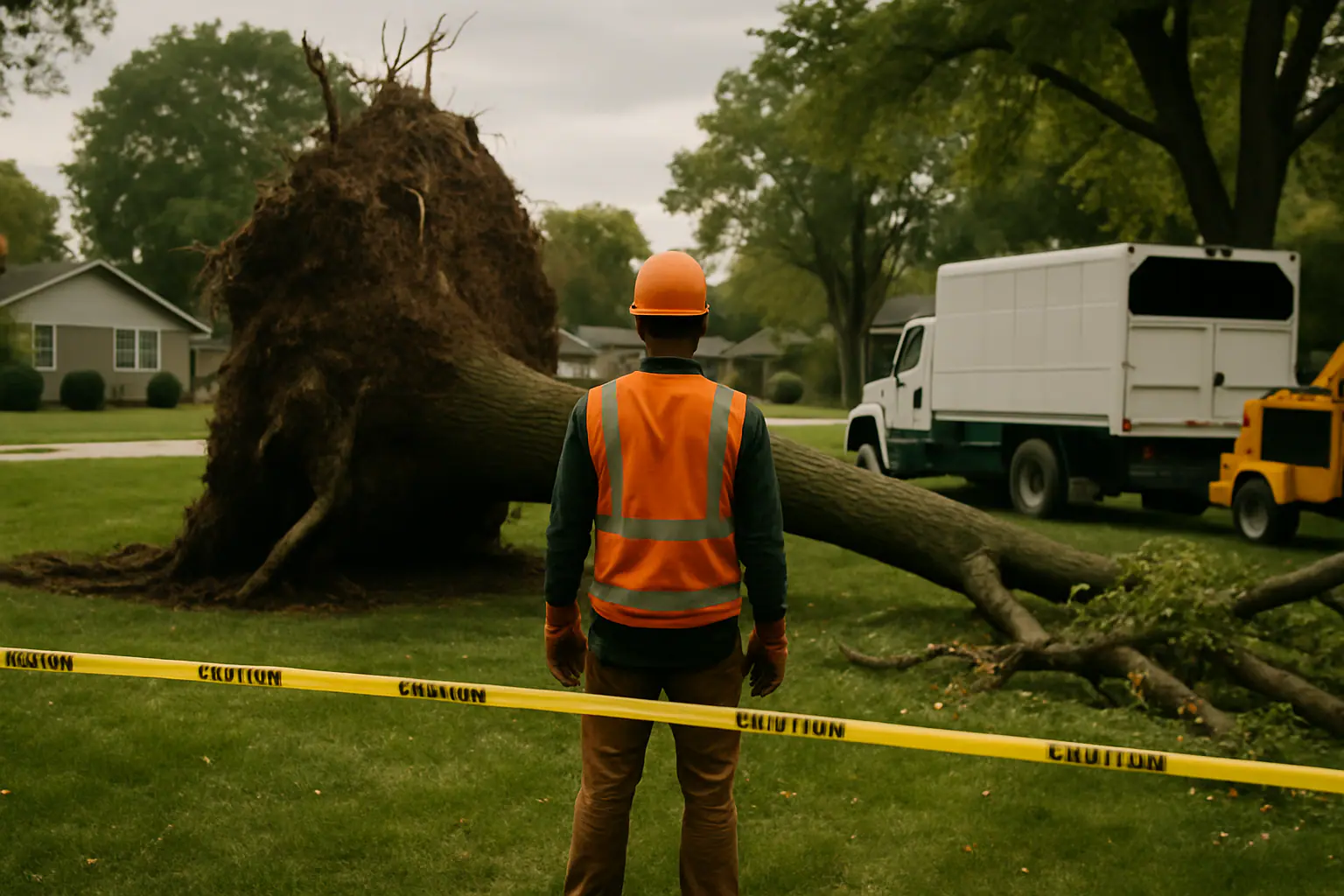
Stay out from under the crown, scan for downed power lines before approaching anything, and don't cut anything yet — a fallen tree is a spring-loaded structure of trunk-and-limb tension that behaves nothing like firewood. Storm-fall injuries overwhelmingly happen during cleanup, not during the fall itself.
Walk the Perimeter First
Circle the tree from distance before getting close. Check overhead: lines draped anywhere near the canopy mean stop entirely and call the utility — conductive contact zones extend farther than people expect through wet brush. Then check the root plate: an uprooted stump ball standing upright is genuinely unstable and can settle suddenly, crushing anything beneath its lean. Finally check what the crown rests against — fences, sheds, vehicles and neighboring property all change both the safety picture and the insurance one.
Photograph Before You Touch Anything
Wide shots showing context, then details of the root plate, break point and anything damaged underneath. If insurance might be involved — and with significant trees it usually is — this documentation takes ten minutes now versus weeks of dispute later. Note the date and rough time; weather verification is standard claim procedure.
Understand Why DIY Cutting Goes Wrong
Felled trees store energy: limbs bent under the trunk's weight, trunks bridged between stumps, crowns compressed against the ground. Cut the wrong member and released tension moves faster than reaction time — sawyers call it a bar pinch when they're lucky and a strike when they're not. Professional crews read these tensions constantly; homeowners reliably underestimate them. The honest rule: if the tree is bigger than your chainsaw bar suggests you handle comfortably, or anything about the position looks weird, it is weird for a reason.
Your Realistic Options, Ranked
- 1Small tree, clear ground, no tension: limb it methodically from the tips, watch for roll, keep escape routes open — reasonable DIY territory
- 2Large tree, tangled crown, or any structure contact: professional removal — the equipment difference alone justifies it
- 3Just need the mess gone after someone else cut it: our brush and debris cleanup loads, chips and hauls while you stay dry
- 4Root plate still heaving or trunk cracked but standing: nobody touches it — that is a job requiring assessment before action
For the third option specifically: many Lafayette County homeowners cut their own fallen trees fine, then discover the pile weighs several tons and fills a dozen trailer loads. That's precisely the work our cleanup service exists for across Lafayette County — chipping, loading and haul-off priced by volume rather than guesswork.
Timing Reality After Storms
Widespread wind events create simultaneous demand across entire counties. Crews book honestly in order — no promises of instant response that nobody keeps. What early callers actually gain: better scheduling options, planning help over the phone, and priority when genuine hazards share the queue with cosmetic cleanups. Calling a week late during busy season means waiting behind a week of accumulated work.
One last prevention note: trees rarely fail without prior warning. The dead top nobody reported, the lean nobody watched, the ash nobody identified — our guides on spotting dead branches and warning signs of unsafe trees exist precisely so next year's storm finds your property better prepared than this year's did.