Storm & Urgent Situations
Can You Remove a Fallen Tree Yourself After a Storm?
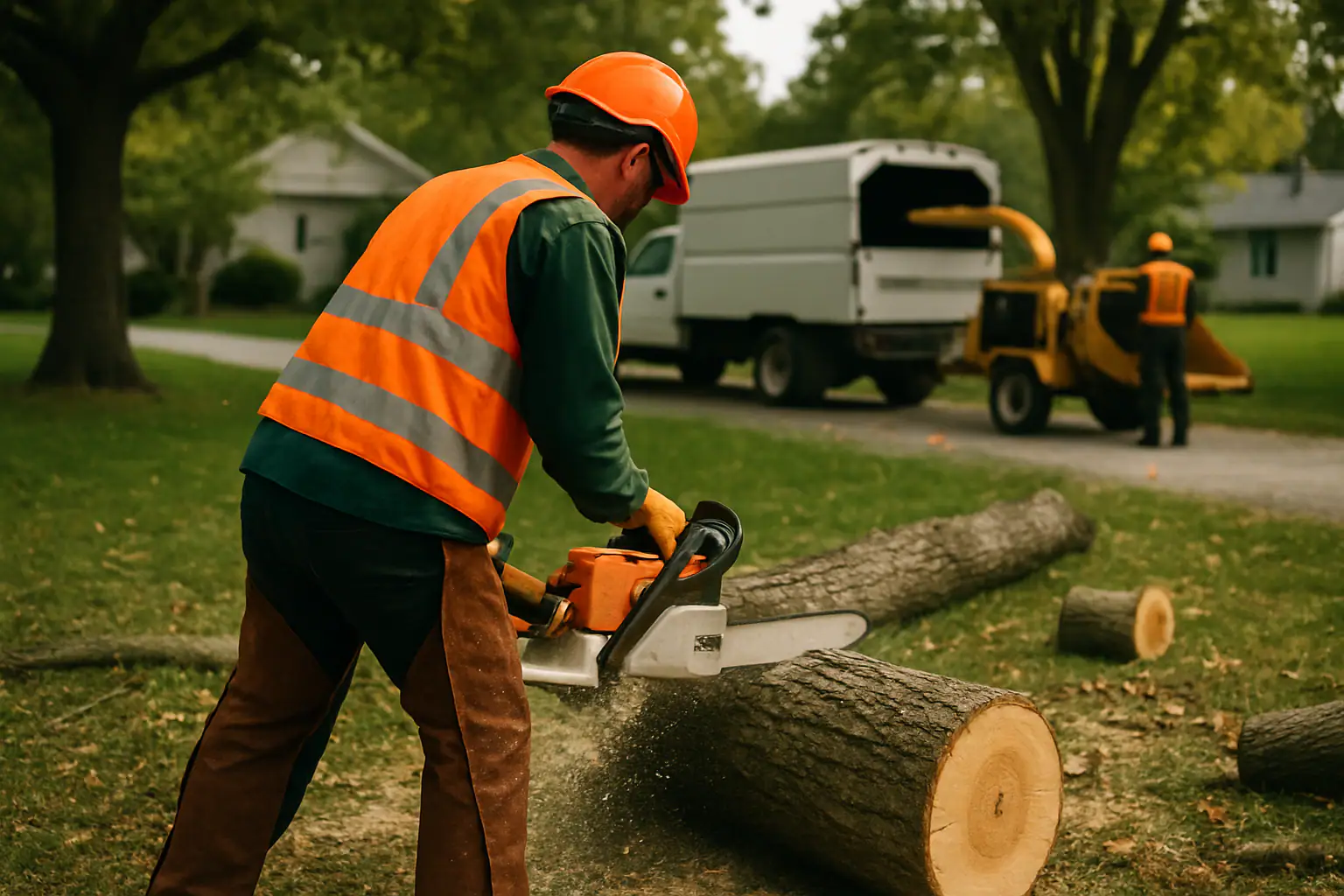
You can safely remove a fallen tree yourself when it's small, resting flat on open ground with no tension, no structure contact and no lines involved. Everything else — bridged trunks, compressed crowns, hung limbs, root plates standing — shifts rapidly into territory where storm-cleanup ER visits originate.
Green Lights for DIY
- Trunk under roughly 8 inches diameter, fully grounded, no bend under it
- Limbs accessible from the side without stepping over the trunk
- Clear drop zones around every cut — nothing valuable within farther than the piece is long
- Sharp chain, fresh bar oil, proper PPE — helmet, chaps, eye and ear protection, gloves, boots
- You have actually used a chainsaw before, recently, successfully
Red Flags: Stop and Call Instead
- Any structure contact — roofs, vehicles, fences change physics and insurance together
- Bridged or bowed trunks — wood under bending stress reacts to cuts like released springs
- Compressed crowns — limbs under the trunk mass carry stored energy that kicks when cut wrong
- Standing root plates — the stump ball settles without warning; people die under them annually
- Lines anywhere near — call the utility, full stop
- Trunks beyond comfortable saw capacity — bar length hints, experience confirms
If You Proceed: Method Beats Enthusiasm
- 1Walk it twice: identify every point of tension before starting the saw — bent saplings underneath, limbs pinned against ground, trunk bridging dips
- 2Work from the tips inward: remove outer limb material first, progressively simplifying what remains
- 3Cut from the tension-aware side: limbs under compression pinch bars when cut wrong; relief cuts manage the squeeze
- 4Keep escape routes open: plan where you go when pieces move unexpectedly — because eventually something does
- 5Rest before fatigue: the majority of chainsaw injuries happen tired, late in the session, rushing the last pile
The Part Nobody Budgets: Disposal Math
Here's the surprise ending most DIY removers discover: cutting the tree was the easy half. A single mature yard tree produces several tons of wood and brush filling pickup loads repeatedly — and rural burn piles aside, that material must go somewhere. This is precisely where our cleanup service slots into DIY projects across Lafayette County: you handle cuts within your comfort zone; we chip, load and haul the results. Hybrid approaches like that make sense more often than all-or-nothing thinking.
For the aftermath-of-storm decision framework, pair this with what to do when trees fall in yards — the two guides together cover the full sequence from first observation to final rake-out.