Storm & Urgent Situations
How to Tell If a Storm-Damaged Tree Is Dangerous
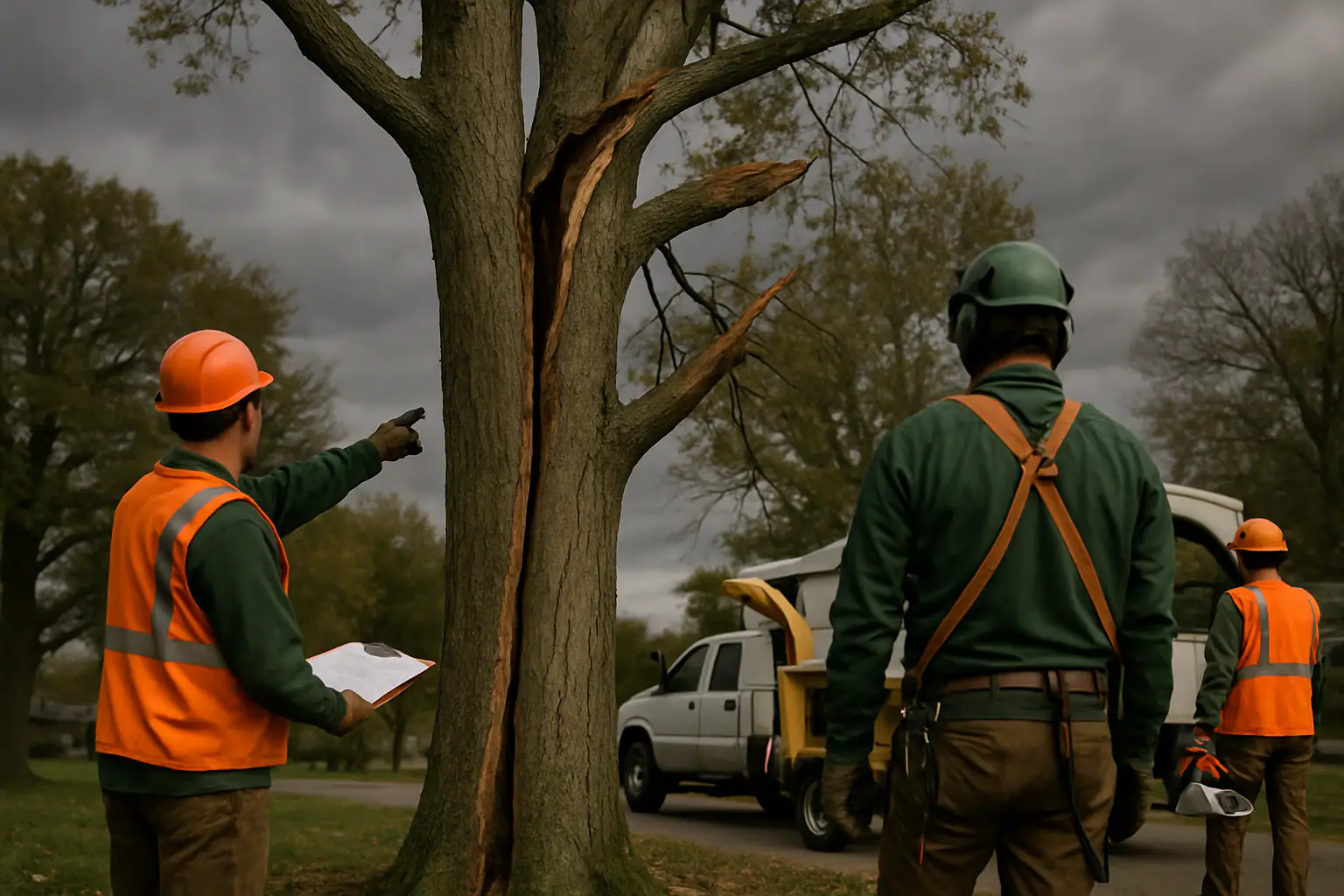
A storm-damaged tree becomes dangerous when its main structure is compromised — trunk cracks, new leans, hanging broken limbs or exposed root plates — and stays manageable when damage is limited to small branch loss. Learning that distinction protects both your family and your trees.
Red Flags: These Mean Call Now
- Vertical trunk cracks running down the stem — especially where two trunks meet; these propagate with each wind event
- Hanging branches caught in the canopy above walkways, drives or roofs — called widowmakers for accurate reasons
- New or increasing lean combined with soil mounding or root exposure on the opposite side
- Split main crotch where a major limb attachment has visibly separated
- Root plate movement — the ground itself lifting or the stump tilting after uprooting pressure
- More than roughly half the crown destroyed, leaving a trunk that cannot sustain itself long-term
Manageable Damage: Usually Fixable With Pruning
- Cleanly snapped small and medium branches — properly pruned stubs seal fine
- Torn limbs with intact bark connection — sometimes salvageable with correct cuts
- Deadwood revealed by the storm that was coming anyway
- Minor tip breakage throughout the crown — cosmetic more than structural
- Bent young trees that straightened partially — staking and pruning may correct them
The gray zone — torn major limbs, partial crown loss below half, bark stripping along one side — deserves professional eyes rather than internet verdicts. Sometimes targeted pruning buys decades; sometimes the same-looking damage hides trunk decay that makes removal inevitable. Eyes on the tree beat photos on Facebook.
Why Timing Matters More Than People Think
Storm-damaged trees fail in patterns: the initial event weakens, subsequent winds finish. Each passing blow loads existing cracks further, and hanging limbs drop on their own schedule — frequently onto whatever sits below, days after the sky cleared. Meanwhile, damaged-but-savable trees deteriorate differently: torn bark dries, wounds attract insects, and delay converts fixable problems into removals. Acting within days preserves options that acting within months forecloses.
What a Professional Assessment Actually Checks
- 1Trunk integrity: sounding for hollowness, checking crack depth, evaluating load paths
- 2Root zone: plate stability, soil movement, underground constraint clues
- 3Crown balance: remaining leaf area versus removed mass, weight distribution against prevailing winds
- 4Targets below: what failure would actually hit, weighted by likelihood
- 5Species factors: brittle species get judged harsher; resilient ones get more benefit of doubt
That assessment produces one of three honest answers: monitor it, prune it, or remove it — with reasoning explained so you understand the recommendation instead of receiving a verdict. Around Corder and greater Lafayette County, that assessment starts with a call to (855) 714-0391. And for prevention-minded reading, our storm-season preparation guide covers making trees pass next year's test before it arrives.