Storm & Urgent Situations
What to Do When a Tree Falls on Your House in Missouri
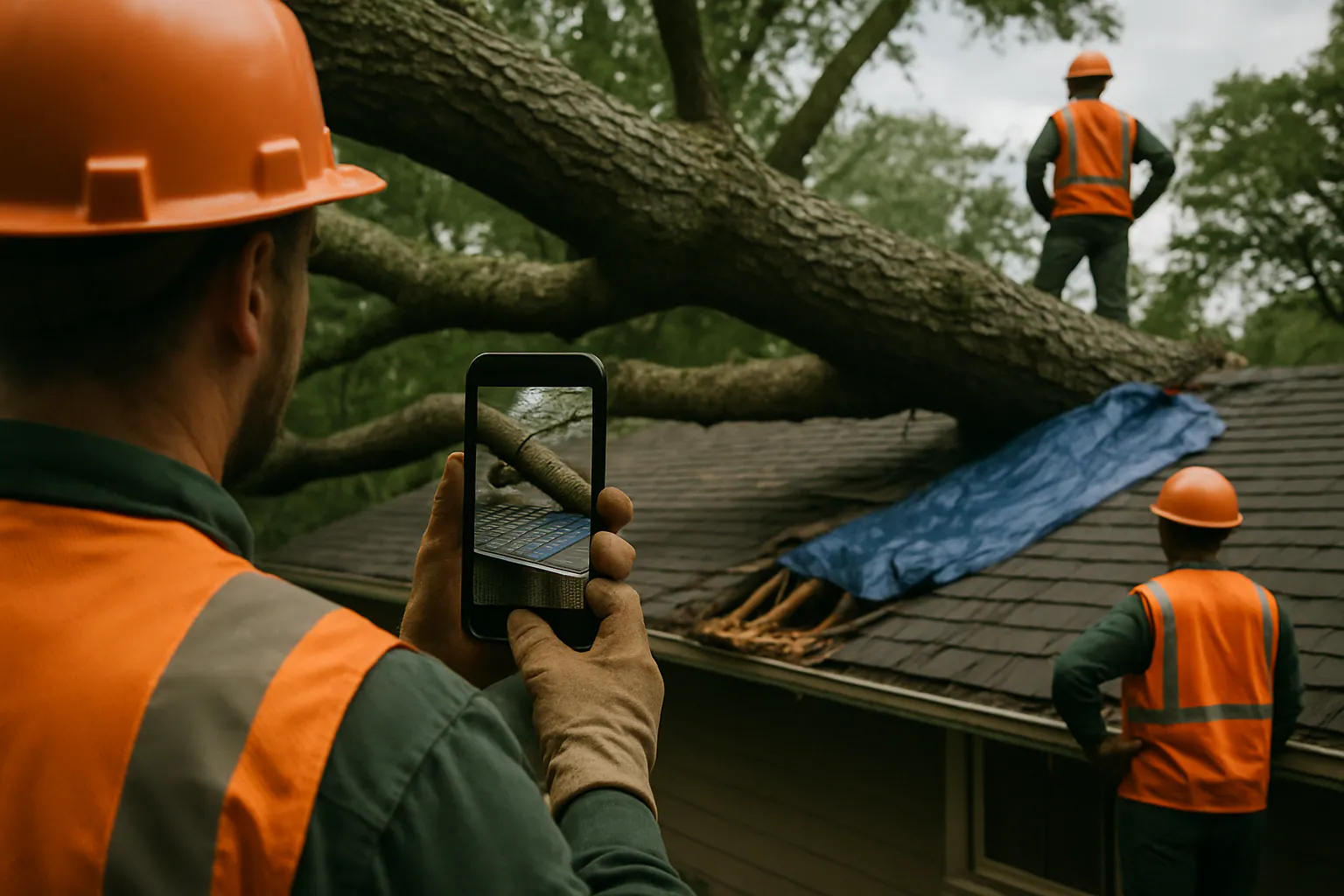
Get everyone out from under the damaged area, treat any injuries, and assume utilities are compromised until proven otherwise — those three actions come before every phone call, photo and cleanup decision. Everything else can wait fifteen minutes; a sagging ceiling or a live wire cannot.
First Five Minutes: People Before Property
Move everyone away from the impact zone, not just out of the room directly under it. Tree weight transfers unpredictably — ceilings bow outward, walls shift, and secondary collapse happens minutes or hours later without warning sounds. If anyone was struck, call 911 before anything else. Head injuries from falling debris hide behind adrenaline; err toward evaluation.
Next: Treat Utilities as Damaged
- Smell gas or hear hissing? Leave immediately and call the gas utility from outside — never flip switches on the way out
- Sparking wires or downed lines touching the tree? Stay back at least 30 feet and call the electric utility; assume anything conductive is energized
- Water leaking into living space? Shut off at the meter if safely accessible to limit interior damage
- Structural creaking or visible wall movement? Everyone stays out until a professional clears it, full stop
Then Document Before Anything Moves
Insurance claims succeed on documentation. Photograph the whole scene wide, then detail shots of impact points, interior damage and the tree itself — including where it came from if it wasn't yours. Video walking through each affected room captures what still photos miss. Do this before any cutting begins, because once crews start removing wood, evidence disappears along with it. Save the weather report for that date too; adjusters verify storm events against claims routinely.
Call Your Insurance Before Calling a Tree Crew
Most policies cover tree-on-structure damage including reasonable removal costs — but insurers often want claim numbers opened before major work begins. One phone call gets your claim number and guidance on approved processes. Emergency stabilization to prevent further damage is almost always reimbursable; full removal sometimes requires pre-authorization. Ten minutes on hold beats arguing about coverage afterward. Our guide to insurance and trees on houses covers this in depth.
Now Bring In Removal Professionals
Trees on structures come off in reverse order from how they'd seem obvious: roof sections get supported or braced as needed, weight comes off gradually, and nothing free-falls onto already-damaged framing. This is rigging work through compromised structures — genuinely dangerous for untrained people and harder than normal removal even for crews. When you call us at (855) 714-0391, describe the situation honestly and we'll tell you plainly what we can schedule and when based on current availability. During widespread storms, demand spikes and calls queue in order — early contact means earlier options.
Common Mistakes Worth Avoiding
- Cutting limbs off the tree before documenting — adjusters need the intact scene
- Sending someone onto a damaged roof to "check it" — structural integrity is unknown
- Paying full price upfront in cash to whoever shows up first after storms — scam season follows every weather event
- Ignoring the tree's root plate and remaining trunk — whatever caused the failure may still be loaded and moving
- Tarping over wet insulation and calling it done — moisture trapped inside framing becomes mold within weeks
Homeowners around Corder, Higginsville and across Lafayette County deal with this scenario most years somewhere nearby. Handled in the right order, it's an expensive inconvenience; handled wrong, it compounds. If a tree has hit your home, our removal team serves Corder and Higginsville plus surrounding communities — call and let us walk you through the next step specific to your situation.