Tree Care Guides
How Often Should Mature Trees Be Trimmed in Missouri?
Most mature Missouri shade trees thrive on professional trimming cycles of every 3 to 5 years — with fast-growing brittle species needing 2-to-3-year intervals and slow sturdy oaks often stretching longer. Location factors adjust everything: roof proximity tightens schedules regardless of species.
Species-Based Intervals
- Silver maple, Siberian elm, cottonwood, willow: every 2–3 years — fast growth means fast deadwood accumulation and rapid clearance regression
- Pin oak: every 3–4 years — predictable lower-limb dieback plus storm-catchable crown density
- White oak, bur oak, walnut, honey locust: every 4–6 years — slower growth holds structure longer
- Ornamental pears and crabapples: every 2–3 years — structural fragility plus aesthetic demands
- Evergreens (pine, spruce): rarely trimmed beyond hazard removal — natural form resists improvement
Location Multipliers
Species schedules assume average positions. Overhanging roofs compress intervals — shingle contact and gutter clogging wait for no calendar. Driveway-clearance trees re-grow into vehicle paths within two years routinely. Wind-exposed open-yard specimens benefit from more frequent thinning than sheltered counterparts. Conversely, back-corner acreage trees can drift past standard intervals without consequence until inspection says otherwise.
What Happens Between Professional Visits
- 1Annual self-inspection each spring: dead branches, new cracks, lean changes — five minutes per tree catching problems early
- 2Post-storm checks regardless of schedule: storms create out-of-cycle hazards worth documenting promptly
- 3Gutter performance monitoring: suddenly frequent clogging signals canopy change overhead
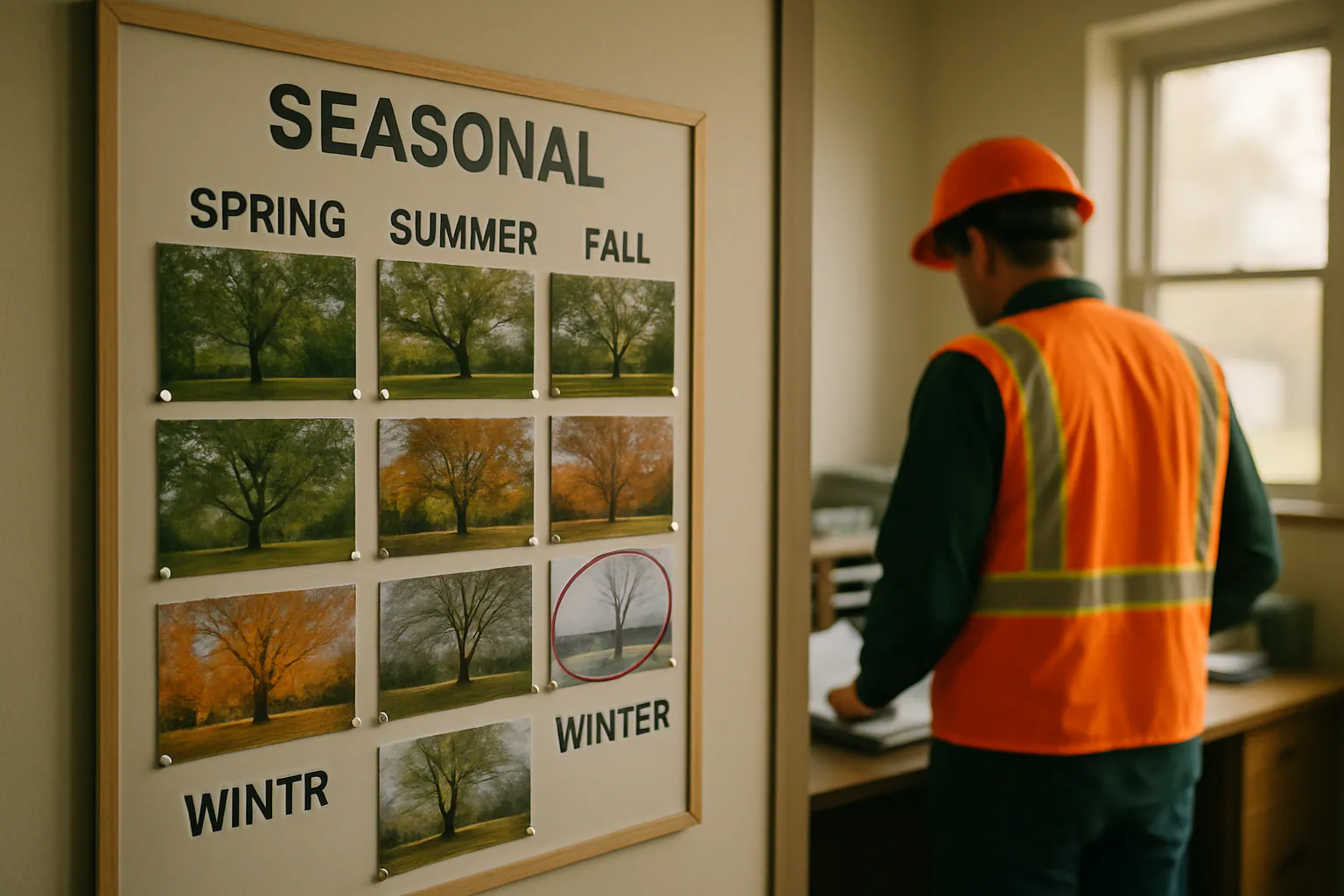
- 4Photo comparisons year-over-year: gradual changes invisible day-to-day become obvious across seasons
Why Consistency Beats Crisis Response
Regular-cycle trees accumulate small costs predictably; neglected ones accumulate risk invisibly then present enormous invoices suddenly. Deadwood removal during routine visits takes minutes; post-failure cleanup plus repairs plus emergency scheduling multiplies totals several-fold. The pattern repeats across every service category we provide around Corder and Lafayette County — maintenance economics beat reaction economics universally.
Setting up cycles is straightforward: call (855) 714-0391, walk your property with us once, and we'll recommend per-tree intervals you can plan budgets around. Related: trimming versus pruning distinctions and storm-season preparation.