Lafayette County Local
Tree Care Around Older Homes in Lexington, Missouri
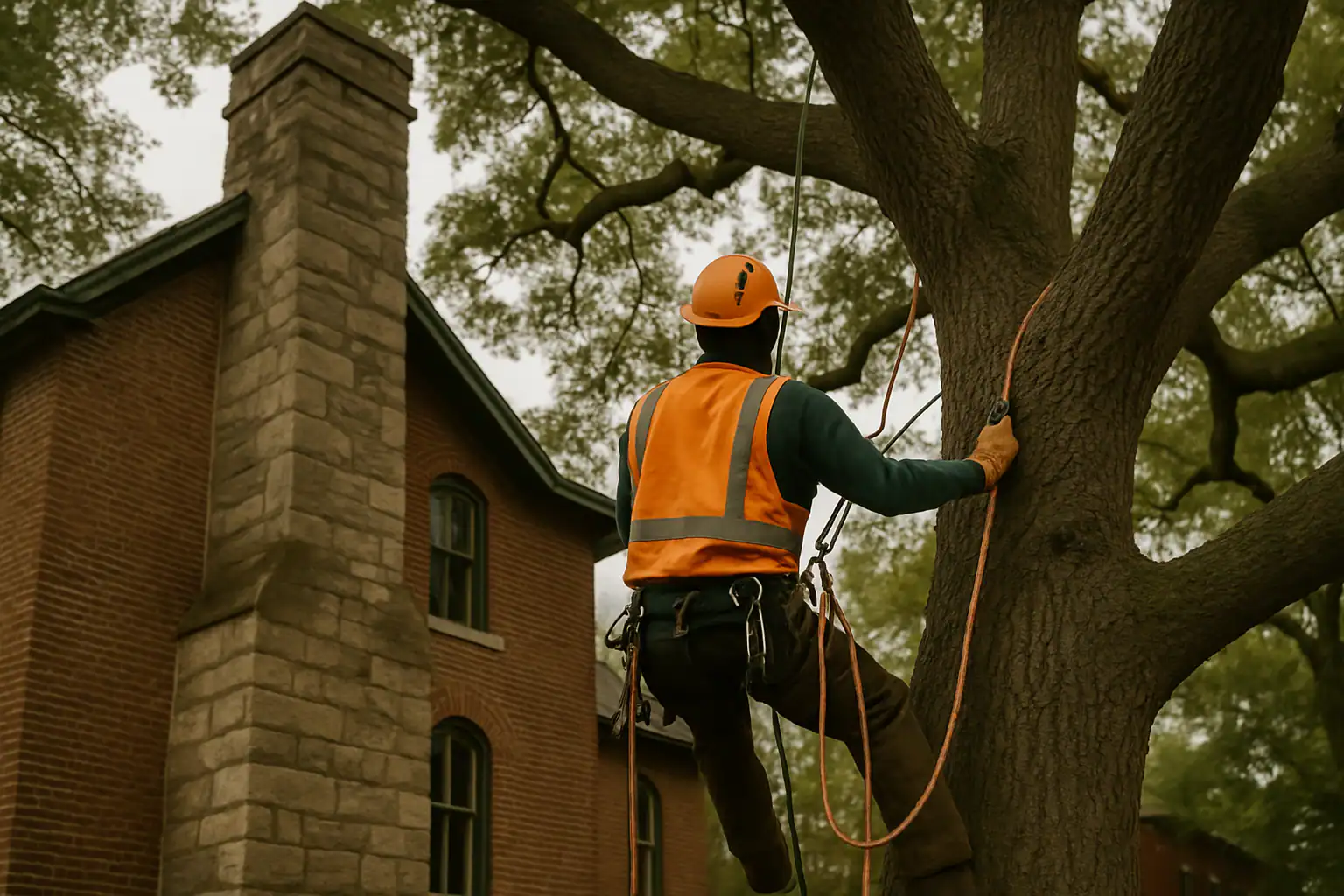
Tree care around Lexington's older homes succeeds through three disciplines: structural patience with irreplaceable canopy, protection-first methods near historic fabric, and timing windows that respect both disease biology and neighborhood character. The town's tree stock deserves nothing less.
Understanding What You Have
Lexington's residential canopy includes genuine elders — oaks, walnuts and elms predating living memory in some yards, especially around the courthouse hill, College Park area and the historic district blocks. Such trees differ categorically from ordinary mature shade: their wood value, shade contribution and neighborhood-defining presence make them assets first, liabilities second — until structure says otherwise. Management goals therefore skew preservation-ward versus newer towns where replacement economics dominate thinking.
Discipline One: Structural Patience
- Prune conservatively on elders: removing more than roughly 20–25% of live crown stresses trees already managing age
- Stage corrections across seasons: big rebalancing happens over 2–3 visits, not one ambitious afternoon
- Monitor rather than react: minor defects in sturdy species warrant watching; same defects in brittle species demand action
- Respect decay boundaries: internal cavities in old oaks sometimes coexist with decades of safe standing — assessment replaces assumptions either direction
Discipline Two: Protection Near Historic Fabric
- 1Rigging defaults over dropping: anything above heritage roofs comes down roped regardless of convenience math
- 2Bed and foundation zones stay untouched: equipment routes skirt masonry footings and original landscaping features explicitly
- 3Root zones get traffic limits: compaction over feeder roots kills old trees slowly and irreversibly — paths get planned around critical areas
- 4Written scopes before cutting: older properties involve owners who document everything anyway; professional practice matches the culture
Discipline Three: Timing Windows
Oak-dominated historic canopies make disease-window discipline non-negotiable: no live oak pruning April through July given wilt transmission mechanics. Late-winter work suits most structural objectives here — bare crowns reveal architecture, frozen ground protects root zones from equipment, and cuts seal ahead of spring stress. Storm-damaged limbs override calendars whenever safety enters, disease risk notwithstanding.
Common Lexington Scenarios
- The courtyard walnut shading the whole rear addition: weight reduction and clearance pruning preserving both tree and shingles
- The declining silver maple between historic homes: honest removal planning with neighbor coordination, since shared fences witness everything
- The hedge-row legacy along original lot lines: selective management keeping function without letting osage reclaim driveways
- Storm-cracked pin oaks post-blow: prompt hazard mitigation with disease-conscious follow-up pruning later
Our Lexington service covers every neighborhood from the river bluffs to Highway 24 — assessments begin at (855) 714-0391. Nearby reading: county-wide tree problems and pruning warning signs.