Business & Property Managers
How Businesses Can Reduce Liability From Dangerous Trees
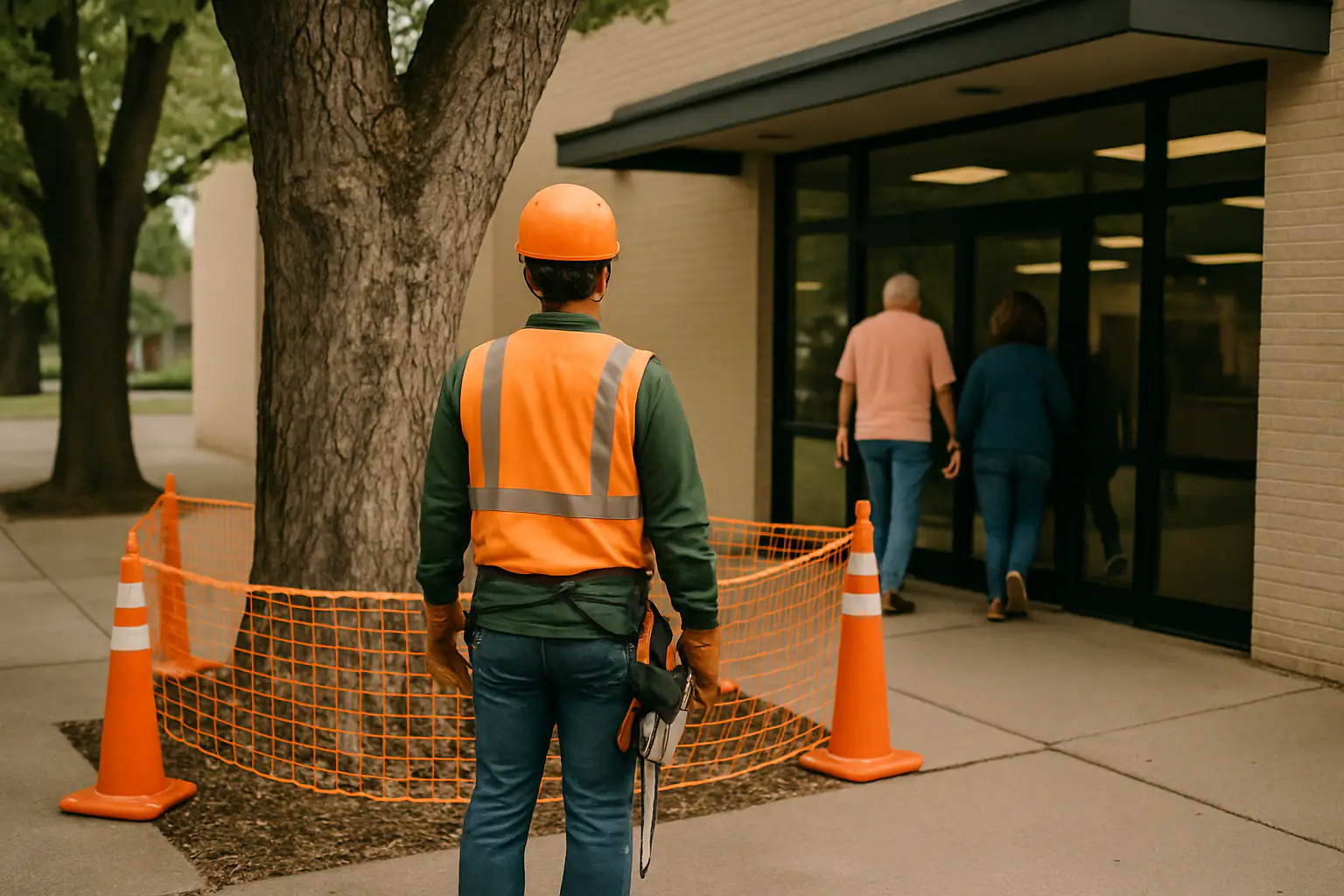
Businesses reduce tree liability through three pillars: documented inspection cycles establishing reasonable care, prompt response converting findings into completed work, and verified-vendor practices ensuring the work itself creates no new exposure. Together they answer the negligence questions before they're asked.
Understanding Premises Exposure
Businesses owe invitees reasonable care regarding premises hazards — including trees. Failure modes creating liability follow notice patterns: known hazard unaddressed anchors negligence claims; unknown-but-discoverable hazards anchor constructive-notice arguments; documented-inspection programs defeat both by demonstrating diligence. The economics are lopsided — annual program costs run fractions of single incident defense costs before settlements even enter.
Pillar One: Inspection Cycles
- Formal professional assessment annually minimum for customer-facing grounds with mature trees (commercial service standard)
- Informal staff sweeps monthly using simple checklists — ten minutes covering entries, walks and parking rows
- Event-triggered additions after significant storms regardless of calendar position
- Written findings every time — verbal assurances leave no trail
Pillar Two: Response Discipline
- 1Triage findings immediately: hanging limbs over customers versus cosmetic density occupy different urgency tiers
- 2Mitigate interim risks while scheduling permanent fixes — barriers, rerouted paths, signage
- 3Complete documented work promptly — findings-to-completion gaps undermine otherwise good programs
- 4Archive everything contemporaneously — reconstructed records persuade nobody
Pillar Three: Vendor Verification
Hiring uninsured or underinsured tree work transfers liability onto your policy when workers get injured on your property — a catastrophic false economy. Verified insurance certificates, written scopes, and established local presence (versus storm-chasing transients) constitute vendor due diligence. Our verification documentation accompanies every quote we issue across Lafayette County.
Special Situations Worth Noting
- EAB-era ash over parking: regional mortality wave makes infested-ash inventories priority documentation items
- Adjacent municipal trees: coordinate rather than assume — boundary responsibilities clarify through inquiry better than litigation
- Signage-obscured sight lines: visibility hazards create vehicle-incident exposure trees merely started
Program setup costs less than one bad afternoon: assessments begin at (855) 714-0391. Extended frameworks: commercial maintenance checklist and HOA planning guide.